
Can you feel it? A little more light at the end of each day. The first blossoms on the trees. An unmistakable sense of movement in the air. Winter is ending, and spring is just around the corner.
"Should I do therapy in a language that's not my native one?"
On the surface, the answer seems simple: do what feels natural, go with the language that flows. But as is often the case in life, the reality is far more complex. What happens when the therapist you need isn't available in your mother tongue? Or what if, as I've discovered in my work, there are surprising and profound benefits to be found in the discomfort of a second language?
I am an English-speaking therapist in Paris, and I have many French clients who actively choose to do their therapeutic work in English. Their experiences have taught me a great deal about how language shapes our emotional worlds. Whether you're an expat seeking support or simply curious about the mind, this is an exploration of that fascinating intersection.
Let's start with the obvious. Therapy is a talking process. If speaking in your second language is a constant, frustrating struggle, then it will be a significant barrier. Trying to navigate deep emotional territory while simultaneously translating in your head can be more exhausting than helpful. In these cases, it's usually best not to make a difficult process even harder.
However, even with fluency challenges, it's not always a deal-breaker. Perhaps budget or location constraints mean that therapy in your native language isn't a viable option. A little collaboration with your therapist can go a long way. You could agree on session topics in advance to give yourself time to prepare, or keep a bilingual journal to bridge the linguistic gap.
Let's assume your fluency is solid. You can express yourself, but there's a voice inside you that would still prefer your mother tongue. That makes perfect sense. Our deepest feelings are often most accessible in the language we first learned to express them in.
But what if stepping outside that comfort zone could offer something valuable?
Some of my French clients have shared that doing therapy in English creates a kind of emotional distance. It allows them to speak about difficult, painful experiences without becoming completely overwhelmed.
I know this from personal experience. When my French was shakier, getting into an argument was a fascinatingly detached process. My brain was working so hard to simply decode grammar and construct sentences that it had no spare capacity to get stuck in the usual reactive, emotional loops. I was calmer. This "numbness" isn't a bug; it's a feature. It can be a powerful therapeutic tool, creating just enough space between you and your pain to allow you to examine it with curiosity, rather than being consumed by it.
Language doesn't just convey ideas; it shapes them. Every language has its own unique way of framing experience, its own emotional centre of gravity.
Take the phrase "I miss you." In English, the focus is on the self—I am doing the action of missing. In French, the equivalent is Tu me manques—"you are missing from me." The emotional weight shifts from my action to your absence. It's the same core feeling, but the perspective is subtly, powerfully different.
If a primary goal of therapy is to rethink, reframe, and reshape your own story, working in a different language can be a direct path to doing so. It's not about one language being "better," but about the gift of seeing your own experience through a completely new lens.
Sometimes the resistance isn't about language, but culture. Different countries have different therapeutic traditions. French therapy, for example, can often be more hierarchical and clinical. By contrast, English-speaking therapy, particularly from an integrative tradition, may feel warmer and more collaborative.
Some of my French clients have said things like, "You feel human, not like an analyst," or "You talk with me, not atme." For them, the cultural difference in the therapeutic style is a key part of what makes the work effective.
Of course, it's also perfectly valid to want the comfort of a shared cultural shorthand, to have a therapist to whom you don't need to explain the basics. The goal is to find what works for you.
Ultimately, the choice of a therapist is deeply personal. Trust your gut. But if your ideal linguistic or cultural match isn't available, I encourage you to stay open. Therapy in a second language can be challenging, but it can also be a surprisingly powerful and meaningful path to growth, offering new perspectives on your own inner world that you might never have found otherwise.
Can you feel it? A little more light at the end of each day. The first blossoms on the trees. An unmistakable sense of movement in the air. Winter is ending, and spring is just around the corner.
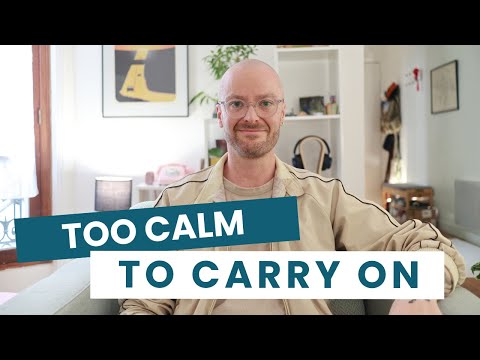
You're the calm one. The rock. The person your friends and partners value because you're chill, easy to get along with, and "no drama." You rarely, if ever, get angry.

Before we begin, I'd like to invite you to do a small exercise. Take a moment and reflect on what comes to mind when you think of the name Marilyn Monroe.