
Can you feel it? A little more light at the end of each day. The first blossoms on the trees. An unmistakable sense of movement in the air. Winter is ending, and spring is just around the corner.
You're the calm one. The rock. The person your friends and partners value because you're chill, easy to get along with, and "no drama." You rarely, if ever, get angry.
You've probably been praised for this your entire life. It feels like a core part of your identity. But what if it's not a personality trait? What if it's a highly sophisticated coping mechanism, one born of a past where anger was simply not safe to express?
As a therapist, I often work with people who have learned to disconnect from their anger. On the surface, they are calm and collected. Underneath, there is a lifetime of suppressed emotion that is quietly wreaking havoc on their lives. Let's explore where this comes from, and what it might be costing you.
This pattern of suppressing anger almost always begins in our developmental years. It's a learned adaptation to an environment where expressing anger felt dangerous.
Maybe you had a parent with a volatile temper, and you learned that showing your own anger would only provoke them into a scarier rage.
Perhaps you grew up in a home filled with hot, uncontrolled displays of anger, a terrifying experience that was so traumatic you made a vow to never be like that.
Or maybe you were simply punished for your anger, taught that it was a "bad" emotion that a "good" child did not have.
Whatever the reason, the result is the same: an adult who, through conscious effort or an unconscious process of disconnection, has learned to swallow their anger down. And while the world may praise this as "calmness" or "maturity," this suppression has significant hidden costs.
Anger is not inherently destructive. Healthy anger is a vital part of our emotional ecosystem. It is an alarm bell, a signal from our nervous system that a boundary has been crossed, an injustice has occurred, or a need is not being met.
When you consistently disconnect from or push down that signal, the energy doesn't disappear. It goes sideways. Suppressed anger often manifests in other, more confusing ways:
The good news is that these are learned habits, and they can be unlearned. The work is not about becoming an "angry person." It's about learning to reconnect with this vital part of yourself in a way that feels safe and can be expressed in a healthy, constructive way.
Learning to feel your anger again can be a frightening prospect, especially if you've spent a lifetime avoiding it. It's a journey that often benefits from the support of a therapist, who can provide a safe space to explore these deep patterns.
The ultimate goal isn't to be less calm. It's to stop being silent about the things that truly matter — your needs, your boundaries, and your right to be treated with respect. It's about becoming a more whole, integrated, and authentic version of yourself.
Can you feel it? A little more light at the end of each day. The first blossoms on the trees. An unmistakable sense of movement in the air. Winter is ending, and spring is just around the corner.
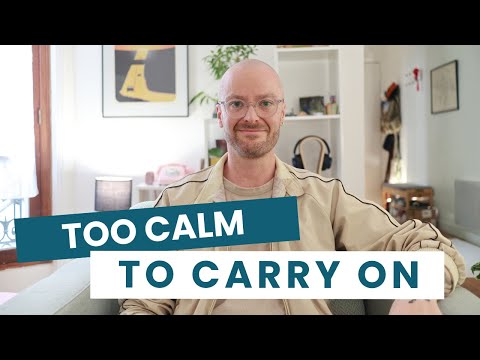
You're the calm one. The rock. The person your friends and partners value because you're chill, easy to get along with, and "no drama." You rarely, if ever, get angry.

Before we begin, I'd like to invite you to do a small exercise. Take a moment and reflect on what comes to mind when you think of the name Marilyn Monroe.